In the modern industrial world, there is a growing need for solutions that combine aesthetics, cost-efficiency, and sustainability. Metal vapor deposition (also known as vacuum metallization) offers exactly this: it makes it possible to create lightweight, economical products with a premium, metallic shine. But how does this technology work, and why are more and more companies choosing it?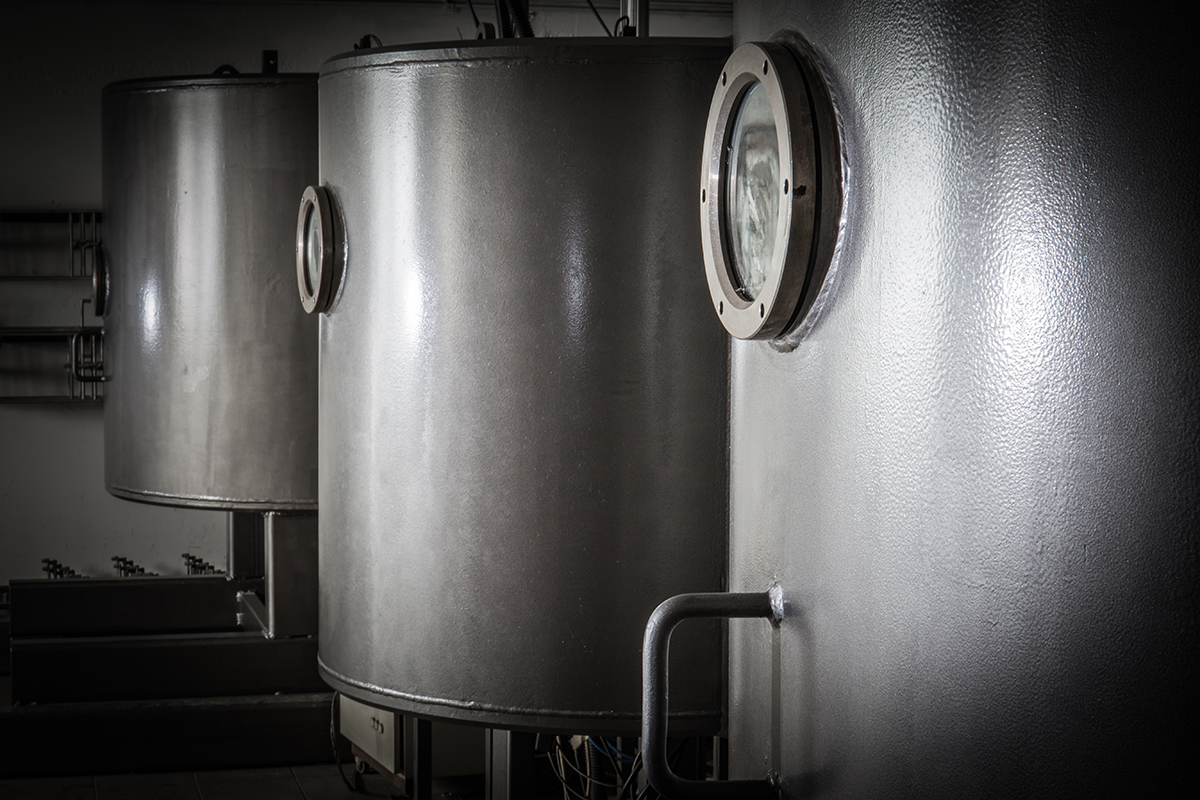
Metal vapor deposition is a specialized surface-treatment process in which a metallic coating is applied to various objects inside a vacuum chamber. The core of the technology is simple: the metal (most commonly aluminum) is heated to its melting point until it evaporates, and the resulting vapor settles evenly on the surface.
The result is a perfectly smooth, metallic, mirror-like coating that is visually indistinguishable from real metal, while the base material retains its advantages: it remains lightweight and easy to shape.
1. Preparation and Cleaning
The base material is carefully cleaned of any dust, grease, or contamination. It is then coated with a special primer lacquer that ensures proper adhesion and durability of the metallic layer.
2. Placing the Material in the Vacuum Chamber
The prepared parts are placed in a vacuum chamber, from which the air is then removed. Creating a vacuum is crucial: only this prevents the metal vapor from reacting with oxygen or other gases, which would degrade the coating quality.
3. Evaporation of the Metal
The metal placed in the chamber (usually aluminum) is heated to extremely high temperatures until it melts and begins to evaporate. In the vacuum, the metal transforms easily and releases large quantities of pure metal vapor.
4. Condensation and Adhesion
The metal vapor spreads evenly throughout the chamber and condenses on the surface of the material. Particle by particle, a thin metallic layer forms—only a few nanometers or micrometers thick—perfectly smooth and uniform.
5. Cooling and Removal
Once the desired layer thickness is reached, the chamber is cooled and the pressure is returned to normal. The coated parts are then removed and, if necessary, sealed with a protective lacquer to increase durability.
Perfect Visual Effect
The metallized surface delivers a true metal-like appearance: mirror-smooth, uniform, and very similar to polished metal. The difference from real metal is detectable only at close inspection.
Cost-Efficient Manufacturing
Real metal parts are heavy and costly to machine, while metallized plastic components are lightweight, inexpensive, and quick to produce. Vacuum metallization uses very little raw material, keeping unit costs competitive.
Environmentally Friendly Technology
Vacuum metallization is energy-efficient and generates minimal waste. It aligns well with modern sustainability expectations.
Lightweight and Versatile
Metallized parts weigh only a fraction of real metal components, reducing transportation costs and overall product weight. This is particularly useful in the automotive and packaging industries.
Durable and Resistant
With the right protective layer, the metallized coating is extremely durable. It does not oxidize or corrode and withstands mechanical stress, UV radiation, and many chemicals.
Automotive Industry
Decorative elements, grilles, emblems, interior parts—all these can achieve a premium appearance through metallization, while weighing far less than metal versions.
Packaging Industry
Cosmetic bottles, perfume caps, vitamin containers, and other packaging frequently use metallization to create a luxurious, high-value appearance.
Lighting Technology
Lamp housings, reflectors, ceiling lights, and other fixtures benefit from metallization for improved light reflection and aesthetics.
Furniture and Interior Design
Handles, lamp shades, mirror frames, and many decorative items are commonly metallized.
Decorations
Christmas ornaments, figurines, and decorative elements achieve their bright metallic finish through metallization.
Electronics and Technical Products
Control panels and device housings can also be metallized, offering a visually appealing and functional solution.
Traditional vs. UV-Cured Metallization
Vacuum metallization has two primary variants:
This process is ideal for small- and medium-batch production. It is cost-efficient, fast, and delivers excellent visual results, providing sufficient mechanical protection for most industries.
UV-based metallization offers increased chemical and mechanical resistance. It is recommended for products exposed to aggressive substances—such as perfumes, cosmetics, or alcohol-based solutions. The protective lacquer is cured with UV light, creating an exceptionally durable finish.
Metal vapor deposition can be combined with various decorative processes:
A product can incorporate multiple technologies, creating a truly unique, brand-specific appearance.